1. How a Septic System Works (Anatomy & Physics)
A residential septic system is an underground biological wastewater treatment facility. Waste flows from your home through a main sewer line into a watertight concrete or poly tank, where natural anaerobic bacteria break down solids before liquid effluent discharges into the soil absorption field (drainfield).
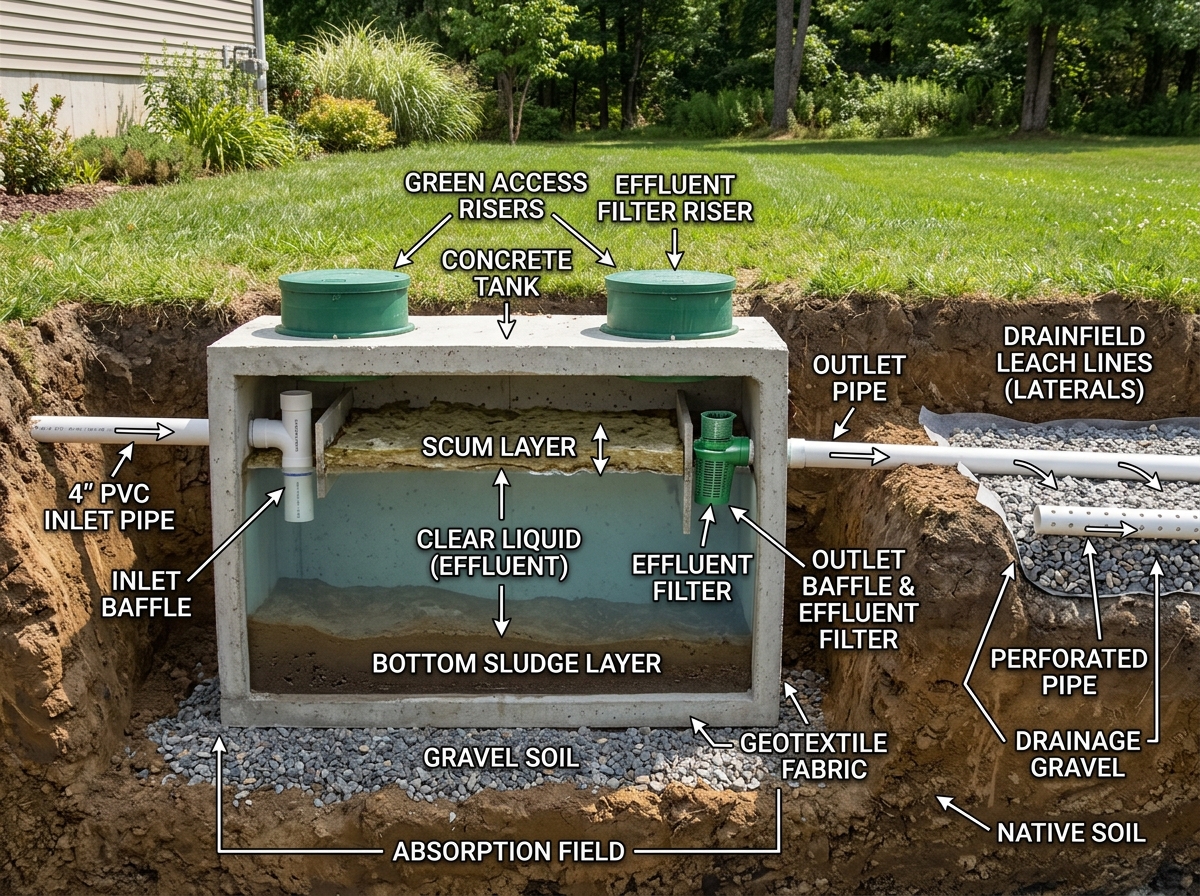
1. The Scum Layer (Top)
Fats, oils, grease, and light soapy residues float to the top of the tank, forming a protective scum layer sealed by the inlet baffle.
2. The Clarified Liquid Zone (Middle)
Relatively clear wastewater sits between the scum and sludge layers. Anaerobic microbes active in this zone break down dissolved organic matter.
3. The Sludge Layer (Bottom)
Heavy organic solids settle to the tank bottom and digest over time. Routine septic tank pumping removes this heavy sludge before it overflows into pipes.
4. Outlet Baffle & Effluent Filter
A plastic filter screen on the outlet pipe blocks suspended solids from reaching the soil drainfield, preserving soil absorption pores.
2. Do Not Flush Matrix vs. Septic Safe Items
Your septic tank relies on delicate living anaerobic bacteria to digest sewage. Flushing harsh chemicals, non-biodegradable synthetic fibers, or grease destroys this bacterial ecosystem and causes immediate pipe clogs.
3. Official Septic Pumping Schedule Matrix
According to the Environmental Protection Agency (EPA) and Spokane Regional Health District standards, septic tanks must be pumped based on tank capacity and household occupant count. Leaving sludge deeper than 33% of the tank depth forces solids out into the drainfield, resulting in $10,000+ replacement costs.
| Tank Capacity | 1–2 Occupants | 3–4 Occupants | 5–6 Occupants | 7+ Occupants |
|---|---|---|---|---|
| 1,000 Gallons (Standard Home) | Every 5 Years | Every 3 Years | Every 2 Years | Every 1 Year |
| 1,250 Gallons (Medium Home) | Every 6 Years | Every 4 Years | Every 2.5 Years | Every 1.5 Years |
| 1,500 Gallons (Large Home / Duplex) | Every 7 Years | Every 5 Years | Every 3 Years | Every 2 Years |
*Note: Homes with garbage disposals, in-home daycare operations, or heavy laundry usage should decrease pumping intervals by 1 year.
4. The 7 Early Warning Signs of Septic Failure
Catching septic issues early saves thousands. If you notice any of these 7 warning signs, your tank or drainfield is experiencing stress:
Slow Draining Sinks & Tubs
Wastewater drains sluggishly across multiple fixtures in the home simultaneously, indicating high tank levels or mainline blockage.
Gurgling Plumbing Pipes
Bubbling or gurgling sounds heard in toilets or drains when running water or flushing indicate trapped air from line restrictions.
Foul Sewage Odors Outdoors
Persistent sewer gas smells around your septic tank lids, yard vent pipes, or drainfield area signal gases escaping unsealed ports.
Unusually Green Grass over Drainfield
Lush, bright green, fast-growing grass over the leachfield trenches indicates excess nitrogen effluent surfacing near root zones.
Standing Water / Spongy Lawn
Soggy soil or puddles of murky water pooling over your septic tank or drainfield mean soil absorption failure.
High Water Control Panel Alarm
Audible buzzing or red warning lights on pump control panels signal pump failure or float switch malfunction in pressure systems.
Critical Emergency: Sewage Backing Up Into Drains
Dark wastewater backing up into lowest level floor drains, toilets, or bathtubs is a 24/7 priority emergency requiring immediate commercial pumping and line clearing.
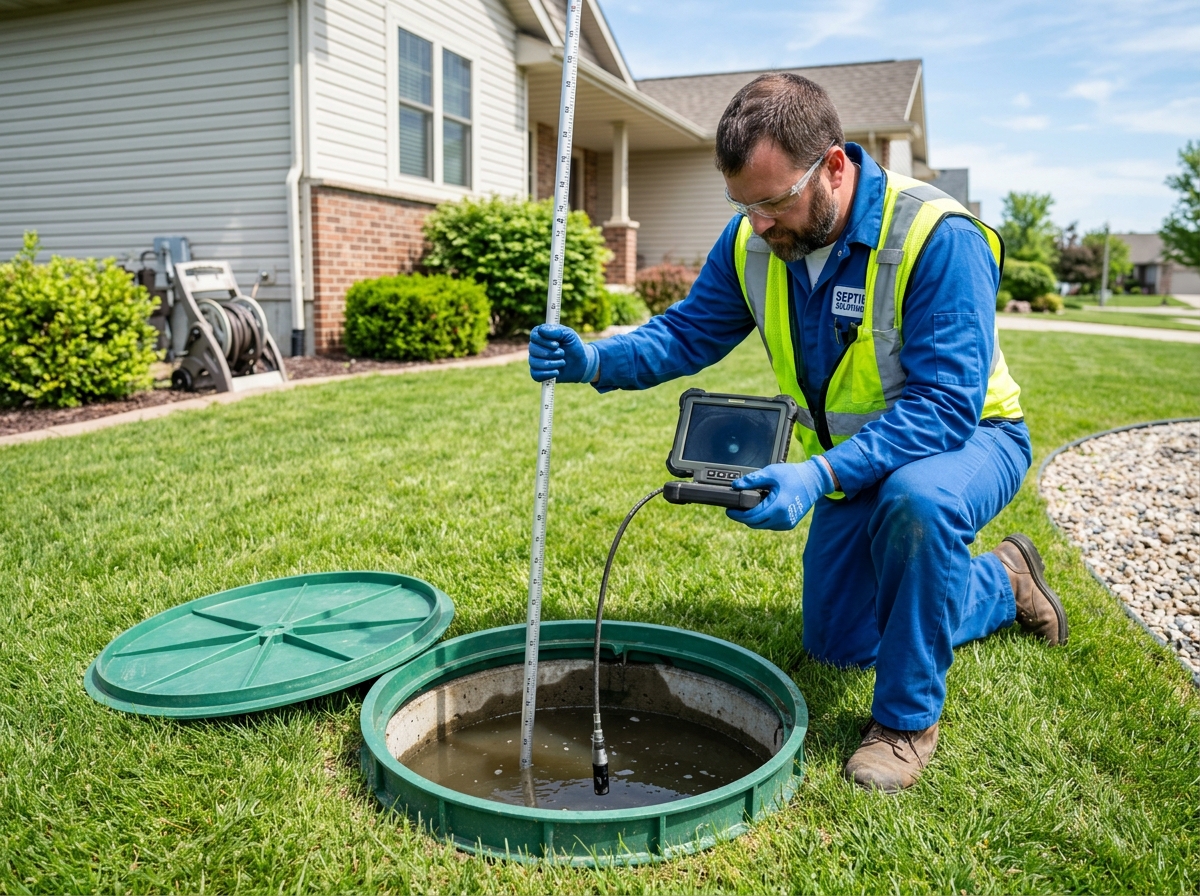
Digital Camera Inspection & Sludge Auditing
Not sure if your system is backed up or just needs pumping? Spokane Septic Services deploys self-leveling 1080p HD camera probes and 512Hz sonde locating equipment to inspect main lines, verify baffle integrity, and measure exact sludge depth without destructive digging.
Learn About Camera Inspection →5. Spokane Winter Septic Freeze Protection Guide
Inland Northwest winters feature prolonged sub-zero freeze cycles. Shallow sewer pipes, uninsulated riser lids, and compacted soil are vulnerable to severe freezing, causing frozen lines and backup emergencies.
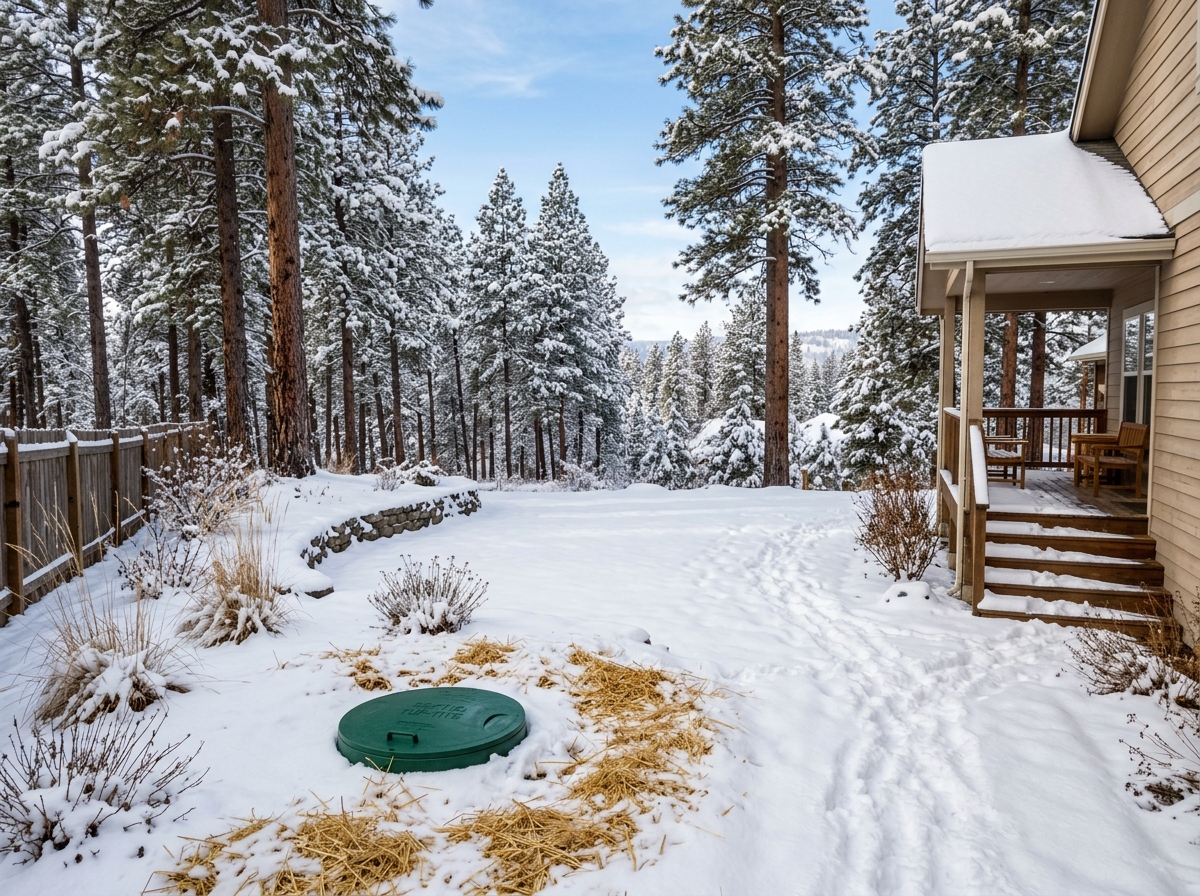
4 Cold-Weather Maintenance Rules
1. Maintain Natural Snow Insulation — Never shovel snow off your septic tank or drainfield lawn. Natural, uncompacted snow acts as a thermal blanket keeping frost from penetrating deep into the soil.
2. Keep Lawn Grass Tall in Fall — Stop mowing your drainfield lawn in late September. Tall grass catches snow and traps insulating air layers over pipe trenches.
3. Never Drive Heavy Vehicles Over Pipes — Driving snowmobiles, cars, or heavy equipment compacts snow and drives frost deep into the soil, crushing shallow pipe lines.
4. Install Heavy-Duty Green Riser Lids — Replace buried concrete lids with airtight, insulated PVC risers before November to seal out freezing wind drafts. See Riser Installation.